ROUTESOFKILIMANJARO.COM · UPDATED AUGUST 2026 · NO OPERATOR SPONSORSHIP
ROUTES OF KILIMANJARO › BEST TIME TO CLIMB
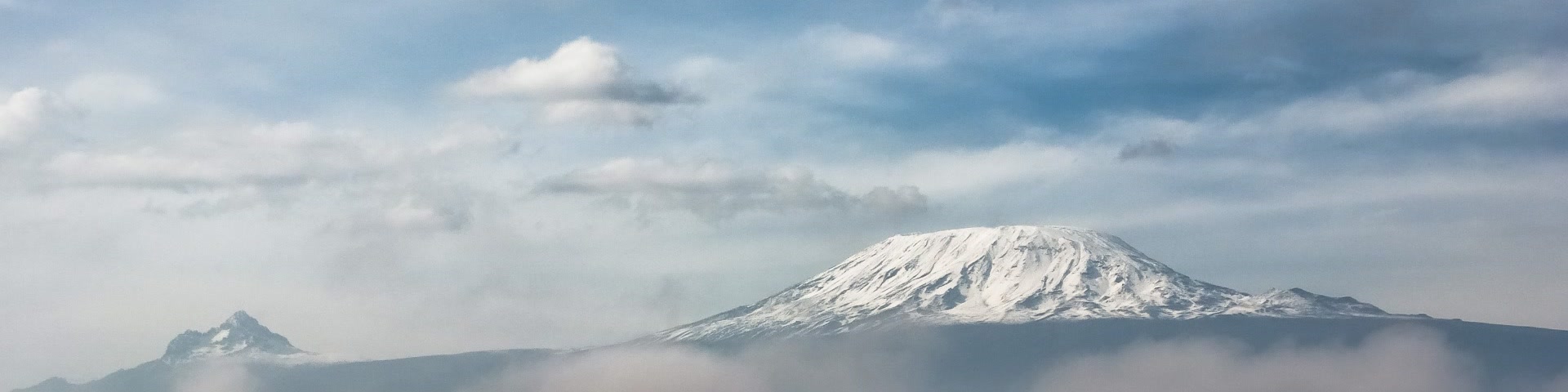
THE BEST TIME
TO CLIMB
KILIMANJARO
Two dry seasons, two wet ones, and twelve months of operators telling you their month is the good one. Here is the weather, the crowd level and the moon for each — and the reason none of it matters as much as the length of the itinerary you book.
Short version: June–October and January–February are the dry windows. March–May is the worst. But a 5-day climb in August is still worse than an 8-day climb in April.
THE SHORT ANSWER
The two dry seasons are January to mid-March and June to October. Those are the windows almost everyone should book in, and between them they hold most of the year's clear summit mornings.
Late March through May is the long rains, and April is the worst month of the year. Rain on the lower slopes is heavy and daily, the forest trails turn to mud, and summit views are frequently obscured. It is climbable. It is not enjoyable for most people.
November into early December is the short rains — lighter, patchier, and over more quickly than the long rains. It is the best of the wet-season options if you want an empty mountain.
July and August are the busiest weeks of the year and also, on the summit, the coldest. September and early October give you nearly identical weather with noticeably fewer people.
February is the mildest of the dry months at altitude, and the most common answer from people who have climbed in several seasons.
If your dates are fixed and they land in the wet season, the useful response is to add days and change route, not to cancel. Rongai approaches from the mountain's dry northern side and handles rain better than anything on the south.
WHY KILIMANJARO HAS TWO DRY SEASONS
Kilimanjaro sits three degrees south of the equator, so it has no summer or winter in the sense most visitors expect. Its weather is governed by the Intertropical Convergence Zone — a belt of low pressure and rising air that migrates north and south across East Africa twice a year, dragging rain with it. The mountain gets soaked as the belt passes over, dries out as it moves away, then gets soaked again on the return. That double pass is what produces two wet seasons and two dry ones rather than one of each.
One consequence matters for planning. Altitude changes the picture more than the calendar does. The rainfall figures below describe the rainforest and moorland zones, roughly 1,800 m to 4,000 m, where nearly all of it falls. Above about 4,500 m the air is dry in every month and precipitation arrives as snow, not rain. Wet season on Kilimanjaro is mostly a problem for the first three days of your climb, not the last two.
The second consequence is that the mountain builds its own weather. Warm air rising off the plains condenses as it hits the slopes, which is why clear mornings routinely become cloudy afternoons even in the driest weeks. Guides plan around it: an early start is a weather strategy, not just a schedule.
EVERY MONTH, COMPARED
Rainfall figures are for the rainforest and moorland zones and are approximate — they vary by year, by slope and by source, and no primary station data for the upper mountain is published. Treat them as bands, not measurements. Crowd levels are a five-point scale derived from route traffic counts and seasonal booking patterns.
| Month | Rain (mm) ○ | Summit night ○ | Crowds ▲ | Verdict |
|---|---|---|---|---|
| January | 40–60 | −7 to −12 °C | ●●●○○ | Dry, mild, green slopes. Busy over New Year, then eases. |
| February | 40–60 | −7 to −12 °C | ●●●○○ | The mildest dry month at altitude. Many climbers' first pick. |
| March | 130–160 | −7 to −13 °C | ●●○○○ | Good to about the 15th, then the long rains arrive. Book early March only. |
| April | 350–400 | −5 to −12 °C | ●○○○○ | The wettest month of the year. Avoid unless you have no choice. |
| May | 200–250 | −5 to −12 °C | ●○○○○ | Still wet, improving late. Empty trails, cheap, muddy. |
| June | 30–50 | −10 to −18 °C | ●●●○○ | Dry season resumes. Cold, clear, and quieter than July. |
| July | 15–30 | −12 to −20 °C | ●●●●● | Peak crowds, peak clarity, coldest summit nights of the year. |
| August | 20–30 | −12 to −20 °C | ●●●●● | As July. Book six to twelve months ahead. |
| September | 15–25 | −10 to −18 °C | ●●●●○ | July weather, fewer people. The connoisseur's month. |
| October | 40–60 | −8 to −15 °C | ●●●○○ | Good early, wetter late. Quiet and still reliable in the first half. |
| November | 120–160 | −7 to −13 °C | ●○○○○ | Short rains. Lighter than April, and you may have camps to yourself. |
| December | 80–110 | −7 to −12 °C | ●●●○○ | Improves through the month. Christmas and New Year book out fast. |
Summit-night temperatures exclude wind chill, which routinely takes the felt temperature ten degrees lower. Every month of the year is below freezing above 5,500 m.
BEST OVERALL
September. Dry-season weather with meaningfully fewer people than July or August, and slightly warmer summit nights.
BEST FOR WARMTH
February. The mildest nights at altitude and the greenest lower slopes, at the cost of sharing the trail over the New Year peak.
BEST FOR SOLITUDE
Late November. The short rains keep most people away, the rain is patchier than April's, and Rongai stays walkable.
CLIMBING UNDER A FULL MOON
Summit night starts around midnight and you walk for six or seven hours in the dark. Under a full moon the glaciers and the scree light up, you can often walk with your headtorch off, and the mountain looks like nothing else you will ever see. It is a genuinely good reason to time a climb, and almost every operator will tell you so.
Here is the part they leave out. Full-moon weeks are the first to sell out, they carry the year's highest prices, and they concentrate climbers into the same few summit nights — so the trail above Barafu becomes a queue of headtorches and the summit sign has a line at it. You are trading solitude for light.
And the alternative is better than it sounds. On a new moon, with no light pollution for a hundred kilometres in any direction, the sky above 4,000 m is as good as anywhere on Earth. A significant number of people who have climbed both say the new-moon star field was the better memory, and that a headtorch is entirely adequate for the walking. The moon is a luxury, not a necessity.
REMAINING 2026 ◆
| Date | Moon |
|---|---|
| 26 September 2026 | Harvest |
| 26 October 2026 | Hunter's — supermoon |
| 24 November 2026 | Beaver — supermoon |
| 24 December 2026 | Cold — supermoon, closest of the year |
2027 ◆
| Date | Moon |
|---|---|
| 22 January 2027 | Wolf — supermoon |
| 20 February 2027 | Snow — supermoon, penumbral eclipse |
| 22 March 2027 | Worm |
| 20 April 2027 | Pink |
| 20 May 2027 | Flower |
| 19 June 2027 | Strawberry |
| 18 July 2027 | Buck |
| 17 August 2027 | Sturgeon |
| 15 September 2027 | Harvest |
| 15 October 2027 | Hunter's |
| 14 November 2027 | Beaver |
| 13 December 2027 | Cold |
Dates are the internationally published peak, in Universal Time. Tanzania runs three hours ahead, so a late-evening UT peak falls the following morning locally. In practice this does not matter: the moon reads as effectively full for the night before and the night after, so aim your summit night anywhere in that three-night window.
To summit on a full moon, count backwards. On a seven-day itinerary you start six days before your target summit date; on an eight-day itinerary, seven. Tell your operator the summit date you want rather than the start date — they will do the arithmetic, and it avoids the classic error of booking the start date on the full moon and summiting five nights later under a half moon.
HOW BUSY IT ACTUALLY GETS
Somewhere between 30,000 and 50,000 people climb Kilimanjaro each year ○, and the great majority of them come during the seven dry-season months. Spread evenly across those months that is roughly 4,300 to 7,100 climbers a month, or 140 to 240 people starting a climb on any given peak-season day ▲. Because a climb runs six to nine days, that means somewhere around 850 to 1,660 climbers on the mountain at once ▲ during a busy week — before counting guides and porters, who outnumber climbers roughly three to one.
Those people are not evenly distributed. Barranco, Karanga and Barafu are shared by everyone on the southern circuit and can hold hundreds of tents in July. Rongai and the Northern Circuit stay quiet almost to the summit.
- Move the month, not just the route. September and early October give you July's weather without July's queues. Late November empties the mountain almost entirely.
- Start midweek. Analysis of one large operator's own departures found that a Wednesday or Thursday start roughly halves the number of people you share camps with compared with a weekend start ○ — the same weather, a different mountain.
- Avoid full-moon week if you value quiet. It is the single most concentrated booking window in the calendar.
Peak-season pricing is a separate question from what a climb should cost at all — what a Kilimanjaro climb actually costs →
MONTH MATTERS LESS THAN DAYS
Every operator publishes monthly success rates — 95% in August, 60% in April, that sort of thing ○. All of them are self-reported and none are audited. It is worth holding them next to the one dataset that was not produced by a seller.
The Kilimanjaro National Park Authority's figures ◆ show summit success moving from 27% on five-day itineraries to 85% on eight-day ones. That is a 58-point spread driven purely by acclimatisation time. No credible seasonal effect comes close to it.
The practical conclusion is uncomfortable for anyone selling short climbs in peak season: a five-day climb in perfect August weather is a worse bet than an eight-day climb in the rain. Weather decides how pleasant your week is. Days decide whether you stand at the sign.
So pick your month for comfort, scenery and crowds — those are real and they matter. Then spend your remaining budget on days rather than on a better month.
QUICK ANSWERS
FREQUENTLY ASKED
SOURCES AND FURTHER READING
Where the figures above come from, and where to check them yourself.
- Tanzania National Parks (TANAPA) — the park authority. Current fees, regulations and park notices.
- Kilimanjaro National Park, UNESCO World Heritage Centre — the site listing, including ecology and climate background.
- Tanzania Meteorological Authority — national forecasts and seasonal rainfall outlooks.
- Time and Date — moon phases — verify any moon date above against the published ephemeris.
- Kilimanjaro Porters Assistance Project — audits operators on porter wages, loads and equipment.
- CDC Yellow Book — high altitude travel — the clinical guidance on altitude illness and acetazolamide.
Kilimanjaro Tips covers the on-mountain preparation this page doesn't — layering, sleep, Diamox timing — at kilimanjarotips.com.
MADE IT TO THE SIGN?
We run a small Etsy shop of Kilimanjaro stickers and prints, including the Uhuru Peak signboard. It is the only thing we sell, and it is why this page has no operator sponsorship on it.
VISIT THE SHOP ON ETSYHOW THIS PAGE IS FUNDED
No operator pays to appear here, no booking link on this page earns a commission, and no company was given a preview. The one commercial link is to an Etsy shop we own. Figures are marked ◆ authority data — park, meteorological or astronomical, ○ operator-reported, unaudited, commercial interest, or ▲ calculated on this page, method shown, and where sources conflict we say so rather than picking the convenient one. Corrections are welcome and will be credited.